Behavioral Variability
The product: A digital test to evaluate behavioral variability and difficulty in decision making.
Challenge: Redesign and iterate on a test prototype for a Behavioral Psychology project.
Deliverables: Prototype, Testing, Data Analysis and Sharing Results.
Role: UX Researcher and Prototype Designer.
First Steps
Summary
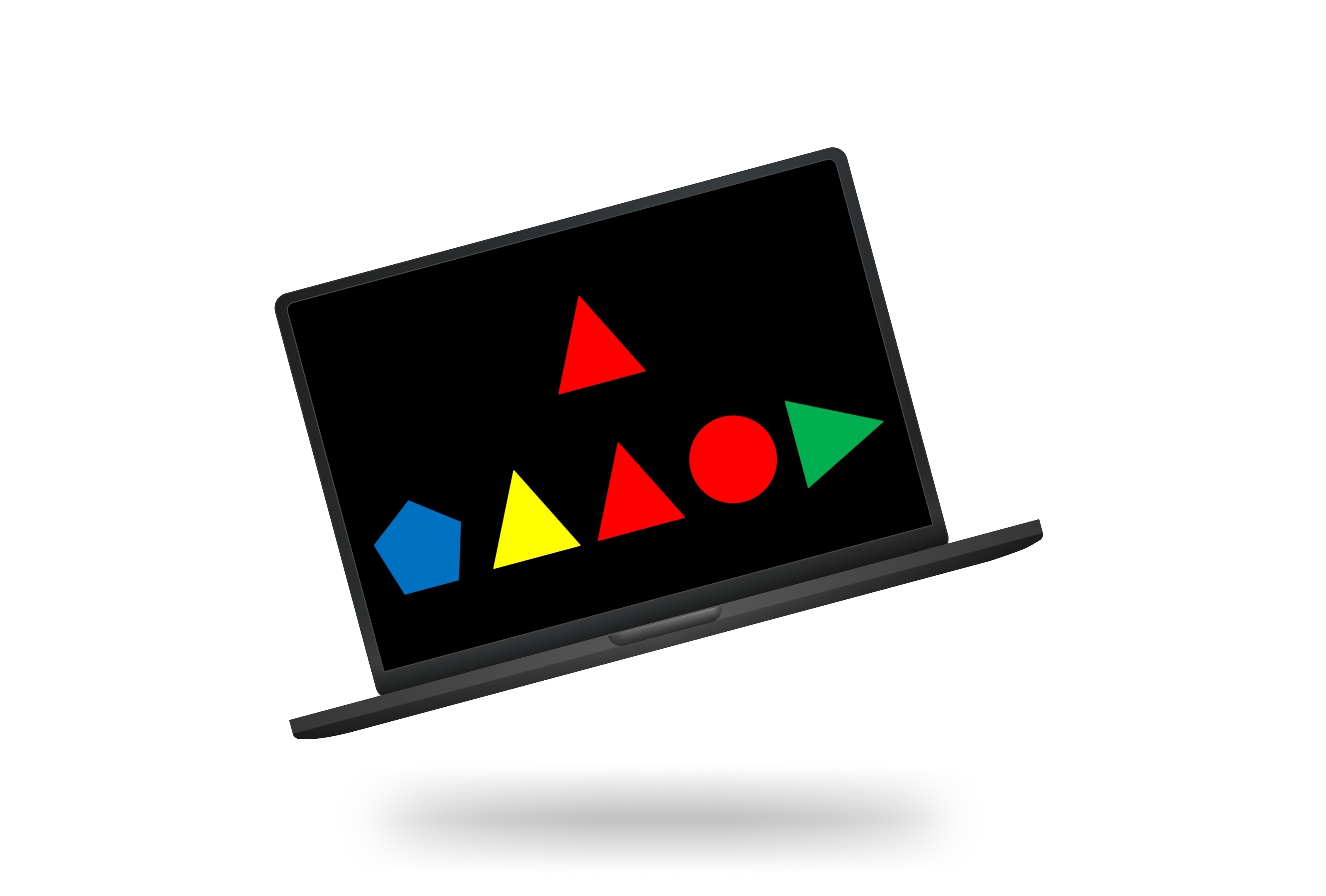
During this phase we got familiar with the concept of Behavioral Variability. The main researcher’s hypothesis was that 'variability in choice increases with the number of available options, but this also increases the difficulty of decision-making'. To help her confirm or deny her hypothesis, we needed to know more about the experimental tool she was working with: a digital prototype within the Psychopy platform that allows participants to choose from a different range of options (from 3 to 5). Participants would be deemed 'correct' when they demonstrated variability by choosing a different option in subsequent trials.
Challenges

Obsolete tool:
The original prototype hadn’t been updated for about three years and it wasn’t compatible with the platform anymore. Also, important files were missing for it to run properly.

Missing feedback method:
For the participants’ answers to be correct they needed to receive feedback on their options selection, but this feature hadn’t been properly implemented.

Lack of efficiency:
The screen that displayed the options was being designed manually which was time consuming for a prototype with repetitive patterns and high similarity between screens.
Project Goals
Based on the challenges, we have to:
-
Create a new updated version of the prototype.
-
Find a feedback method for participants.
-
Automate the layout process for each frame.
Starting the Design
Test Functionality
Before getting deeper into design issues, it’s important to comprehend the test functionality. The test consists of three stages with 180 trials per stage where the participant has to choose between different options (the figures). Half of the participants answer the test from less to more chooseable options (ascendant) and the other half does it in the reverse order (descendant). Each option has a different type of correlation to the main figure (the one on top) and for the participants’ answers to be correct, they have to choose a different correlation in each trial.
Ascendant number of options

Descendant number of options

Correlation between the main figure
DF: Different figure and different color.
SF: Same figure and different color.
ID: Same figure and same color (identical).
SC: Different figure and same color.
DFO: Same figure, different color and different orientation.

Low-Fidelity Prototype
During this phase we created a low-fidelity prototype that covered the primary need of the original prototype: to be updated and functional. We also found a moderator-led solution for participant feedback: as moderators, we told them if their answer was wrong or right once we observed which option they chose and kept a manual register of it.
Participants choose the figure by their position on the keyboard (1, 2, 3) and during the black screen the moderator gives the oral feedback: 'correct' or 'incorrect' and takes notes. The participant skips the black screen with the spacebar.

Usability Studies
We conducted two rounds of usability studies. The first one with 6 participants and the second one with 12. The objective was to observe how the participants completed the expected tasks with the moderator-led feedback. We ran the experiment for each participant and gave feedback on each of their selections. All the participants completed the tasks.
Findings:
-
We occasionally interrupted the test to ensure accurate data collection regarding the participants' choices (due to the manual registration method), but this was time-consuming.
-
The interruptions caused participants to lose focus on their decision-making process, which could potentially affect their final scores.

The objective of these studies was also to give results on latency, scores and variability to the main researcher and her hypothesis. If you’re interested in reading those findings and delving deeper into the research: click here to acces to the translated posters.
Refining the Design
High-Fidelity Prototype
Based on the usability study findings, we needed a way to automate the feedback inside the platform (Psychopy) to avoid human error. Leveraging knowledge from online forums and basic Python scripting, I was able to utilize the 'Code Component' inside Psychopy to add the expected feedback interaction with participants.
After they read the instructions, participants choose a figure by their position on the keyboard (1, 2, 3, 4, 5). During the black screen, the participant can now read the feedback, and the platform automatically logs their score. The participant waits for the feedback to disappear on its own.

Another one of our first challenges was the creation of each screen frame manually, which was time consuming so we needed to automate the layout process for each one of the screens. I was able to implement this idea through the 'Loop' feature inside Psychopy.
Conclusions
Although we didn't get to test this last version of the prototype, the main challenges were adressed and we gave the main researcher a functional prototype to test her hypothesis in the future and compare the results with past ones.
Note: It is important to always validate our assumptions through testing and the current team that is working on this project is getting ready to test this last prototype.
After thoughts
Working on this project challenged me. At the beginning, I was worried about having all the necessary technical knowledge to help my team, but with our abilities together, the end results were successful. This turned out to be an amazing experience that allowed me to learn more about interaction design and testing.
Results Sharing
My team and I shared the obtained results from the testing phase (related to both design and behavioral research) at the congresses Delfín XXVIII and SINCA IX. We created two different scientific posters, shared our findings and experience working with the project. If you’re interested in reading those findings and delving deeper into the research: click here to acces to the translated posters.